
Research & Conservation
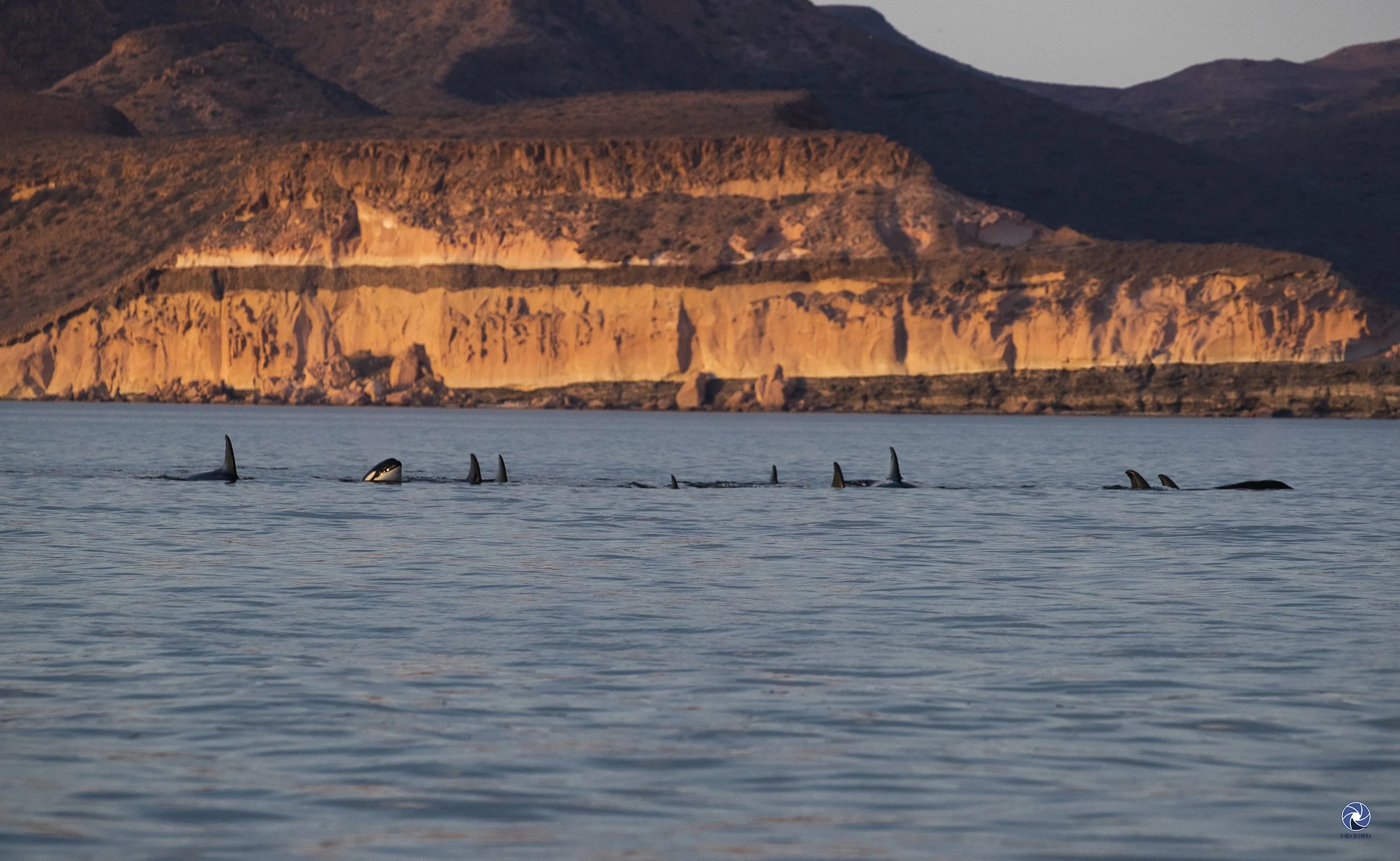
Our ongoing research on killer whales in the Gulf of California, initiated in 2018, encompasses long-term photo-identification monitoring, behavioral observations, analysis of hunting strategies, and studies of ecotoxicological exposure.
Some results of our work:
Identification of individuals
Orca photo-identification is done by taking photographs of certain body areas such as the dorsal fin, eye patch, and saddle. Each area is unique to each individual! Thanks to this tool we understood that there are several groups of orcas that can be regularly observed in this region. Since 2018, photo identification has allowed us to monitor their health and growth. Some of the "most famous" orcas are "Moctezuma," a 9-meter adult male, and "Quetzalli," a 5-meter adult female we have known since she was a juvenile. As you can see, we like to honor our Mexican ancestors, so we name the orcas we identify after them.
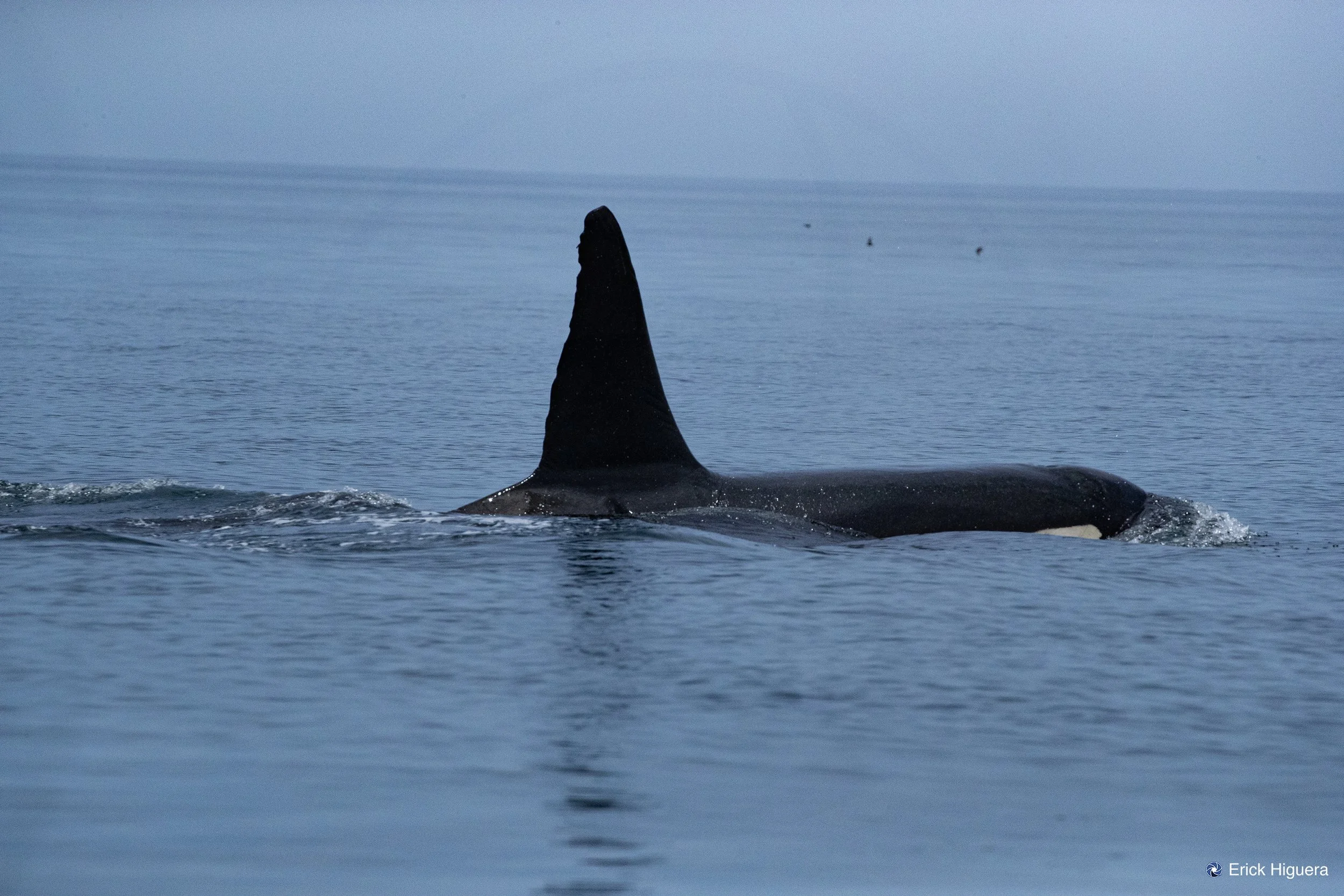
Moctezuma
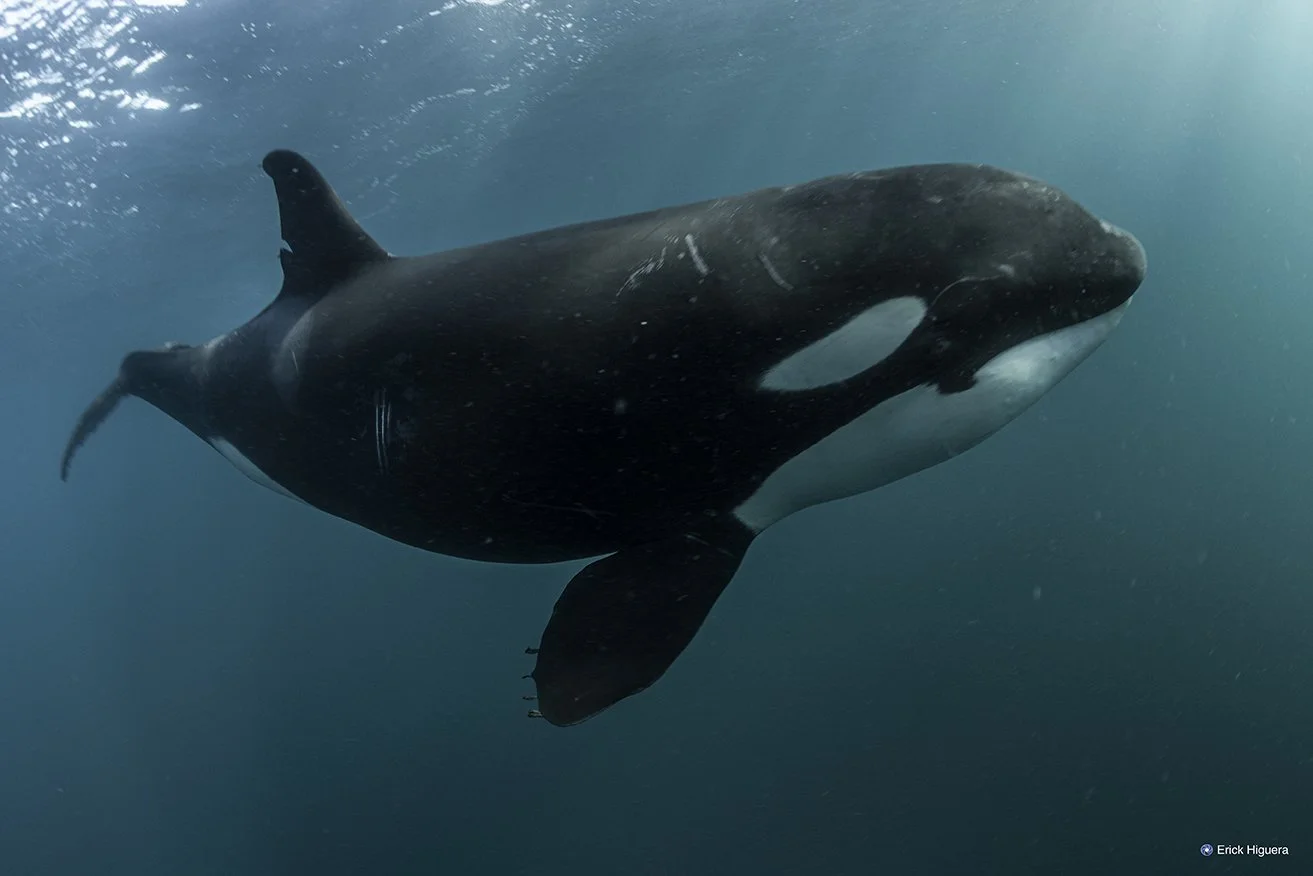
Quetzalli
Hunting strategies
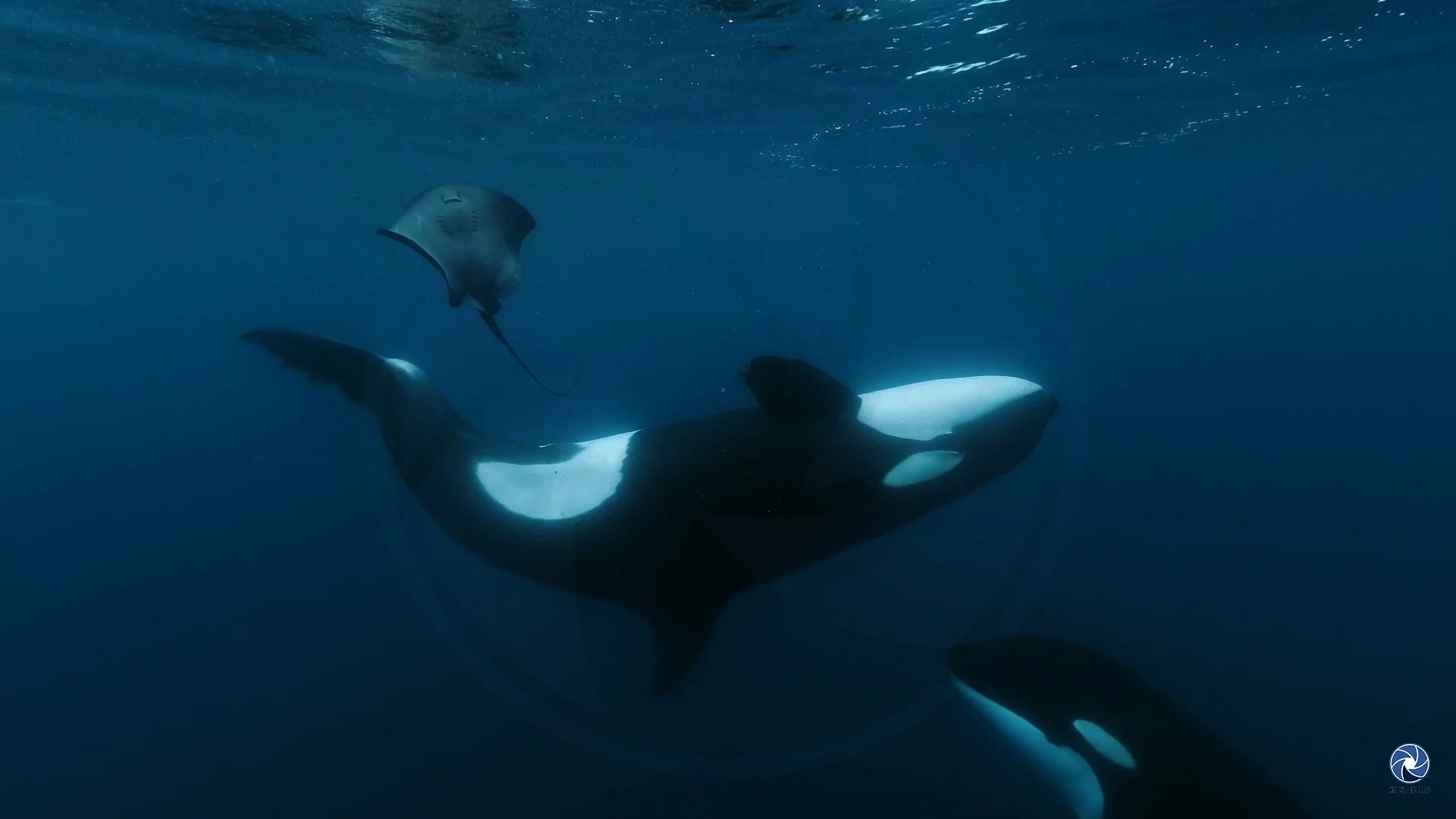
Orcas adapt their hunting techniques depending on prey type and habitat, which indicate a behavioural innovation and possibly cultural transmission within the pod. In the case of sharks (such as the whale shark), it is typical to try to keep the shark on the surface and flip it upside down (inducing a state called tonic immobility in the shark). This is done with the goal of exposing the pelvic area and easily accessing the liver, the organ they consume. In the case of pelagic rays, it is common for orcas to strike them forcefully with their caudal fin to stun them and at the same time avoid stings from the ray's spine.
Conservation
The Gulf of California is recognized as an Important Marine Mammal Area (IMMA), harbouring numerous cetacean species including killer whales. Threats to theses species include habitat and industrial development, changes in prey communities (due to commercial fishing, climate change or habitat shifts), disturbance from unregulated tourism and vessel activities, and contamination or toxic exposure. The information generated by our research has contributed to the development of the first “Orca Management Plan” (Plan de Manejo Tipo) for swimming and watching with orcas in this region. This plan, published in July 2025, is the first regulation in Latin America for tourism activities involving this species and sets zones, limits on boat/swimmer interactions, and approach protocols. It is a positive step, but much remains to ensure protection across the species’ regional range. Conserving killer whales in the Gulf of California is viable but requires coordinated effort—regulation of human interactions, protection of prey and foraging habitats, and robust scientific monitoring.
Publications
Higuera Rivas J.E., Hoyos Padilla E.M., Elorriaga-Verplancken F.R, Rosales Nanduca H., Rosenthal R., & Urbán R. J. (2023). Orcas (Orcinus orca) Use Different Strategies to Prey on Rays in the Gulf of California. Aquatic Mammals 2023, 49(1), 7-18, DOI 10.1578/AM.49.1.2023.7
Ayres K.A., Gallagher A.J. & Higuera-Rivas J.E.(2024). Orca (Orcinus orca) and shark predator-prey interactions within Cabo Pulmo National Park in the Gulf of California, Mexico. Front. Mar. Sci., 11, https://doi.org/10.3389/fmars.2024.1407379
Pancaldi F., Ayres K.A., Gallagher A.J., Moskito J., Williamson K.C., & Higuera Rivas J.E. (2024). Killer whales (Orcinus orca) hunt, kill and consume the largest fish on Earth, the whale shark (Rhincodon typus). Front. Mar. Sci. 11, https://doi.org/10.3389/fmars.2024.1448254
Higuera Rivas J.E., Pancaldi F., Jorgensen S.J., & Hoyos Padilla E.M. (2025). Novel evidence of interaction between killer whales (Orcinus orca) and juvenile white sharks (Carcharodon carcharias) in the Gulf of California, Mexico. Front. Mar. Sci., 12, https://doi.org/10.3389/fmars.2025.1667683
Rosales Nanduca H., Lara Lizardi F., Alvarez J., Higuera Rivas J.E., & Thys T. (2026). Orca and ocean sunfish: Predator-prey interactions and sightings in the Gulf of California, Mexico. Regional Studies in Marine Science, 93, https://doi.org/10.1016/j.rsma.2025.104661